Your Money
Gross vs. Net Salary in Mexico: 2026 Calculation Example
What comes out of a gross salary in Mexico (ISR and IMSS) and a 2026 step-by-step example: from MXN 20,000 gross to what you take home.
Santiago SanchezNovember 27, 2026

A bank transfer moves money from one account to another without cash. In Mexico most go through SPEI, which runs 24/7 and settles in seconds or minutes. International transfers over SWIFT usually take 1 to 5 business days.
Efficient payment management is crucial for the professional success of any freelancer, and one of the most commonly used financial tools in Mexico is the bank transfer. This method is favored because, it is reliable and accessible to anyone with a bank account.
However, there are different types of bank transfers, each with its own characteristics and specific requirements. In this article, we explain their definition, forms, and even other alternatives for receiving and sending money.
A bank transfer is a financial operation where you can send money from one bank account to another. This type of payment method can be carried out between the same or different banks.
It is one of the most common ways to move funds from one bank to another, whether it's a personal, business account, or to make payments for goods and services. A bank transfer is an efficient and secure process to receive payments from your clients, both nationally and internationally.
And remember, as a freelancer, you must keep receipts for each of them for accounting and tax purposes, as they prove the payment of VAT.
In Mexico, you can find various types of bank transfers, the main ones include:
Interbank transfers. These are carried out between different Mexican banks. For this, the Electronic Interbank Payments System (SPEI) is used.
Internal transfers. These are transfers within the same bank. They can be transfers to another account of the same holder or to third parties who have an account in that entity.
Scheduled or periodic transfers. These are configured to occur on a specific date or regularly at time intervals, such as weekly or monthly, whether interbank or internal.
International transfers. Used to transfer to foreign accounts, in this case, through the SWIFT or BIC code. For example, if you need to receive money from another country because you work as a virtual assistant, your bank's SWIFT code is one of the details the payer usually asks for.
QR code and phone-number transfers. Banco de México's CoDi (QR codes) and DiMo (phone numbers) run on SPEI and settle in seconds (CoDi).
Internet transfers. There is also the bank transfer via the internet, one of the most frequent today, as they are quick thanks to the banks' applications.
And if you want to send or receive money in a simpler way, you have the Dimo system, where you only need the person's phone number.
You cannot carry out a bank transfer without knowing what information you need to succeed. Below, we show you the requirements for the different types of bank transfer in Mexico:
SPEI Transfer
Full name of the person.
Name of the bank where you have the account.
Card number, account or CLABE.
CoDi Transfer
CoDi active in the bank's app.
Press the "More" option.
Use the QR code to scan the recipient's account and send the money.
Dimo Transfer
Beneficiary's phone number.
If you are going to receive a bank transfer from abroad, indicate to the sender the following data:
Bank account number.
SWIFT/BIC code.
Full name.
Bank address.
Having clear requirements for each type of bank transfer will help you carry out operations smoothly.
The waiting time is not standard; it will vary based on factors such as banks, the type of transfer, the schedule, and whether it is a business day or not.
However, we can give you an idea:
If the accounts are within the same bank, they are usually processed immediately.
Payments with QR codes through the CoDi system are also effective instantly.
International transfers with SWIFT code generally take between 1 and 5 business days.
Those that are scheduled depend on the date you set.
Interbank transfers (SPEI) are effective in seconds or minutes, depending on the time and the bank involved.
You can always try other ways to move money from one account to another. In fact, there are many popular options, for example, checks or money orders.
If you get paid by clients abroad, ARQ gives you your own US and EU account details to receive payments in USDs and EURc. On the Standard plan, each international payment costs USD 3 or EUR 3.
With the above information, you may have fresher knowledge about bank transfers.
Now, we want to offer you some suggestions so that you can carry out these transactions successfully:
Verify the beneficiary's data.
Check the fees and commissions charged by the bank, especially if it is an international transfer.
Review the bank details at least twice to ensure that the money reaches the correct destination.
Use the authentication methods used by the bank to protect your operations, especially if they are online.
Keep records of the transfer, from receipts to any other documentation for future references or disputes.
SPEI runs 24/7; international transfers move faster if you send them on a business day.
Check the transfer limits imposed by the bank.
Consult your bank's policies to know what you need about the process and times.
Be wary of unknown recipients to minimize the risk of scams.
Follow these tips, and you will see how the money will reach its correct destination without issues.
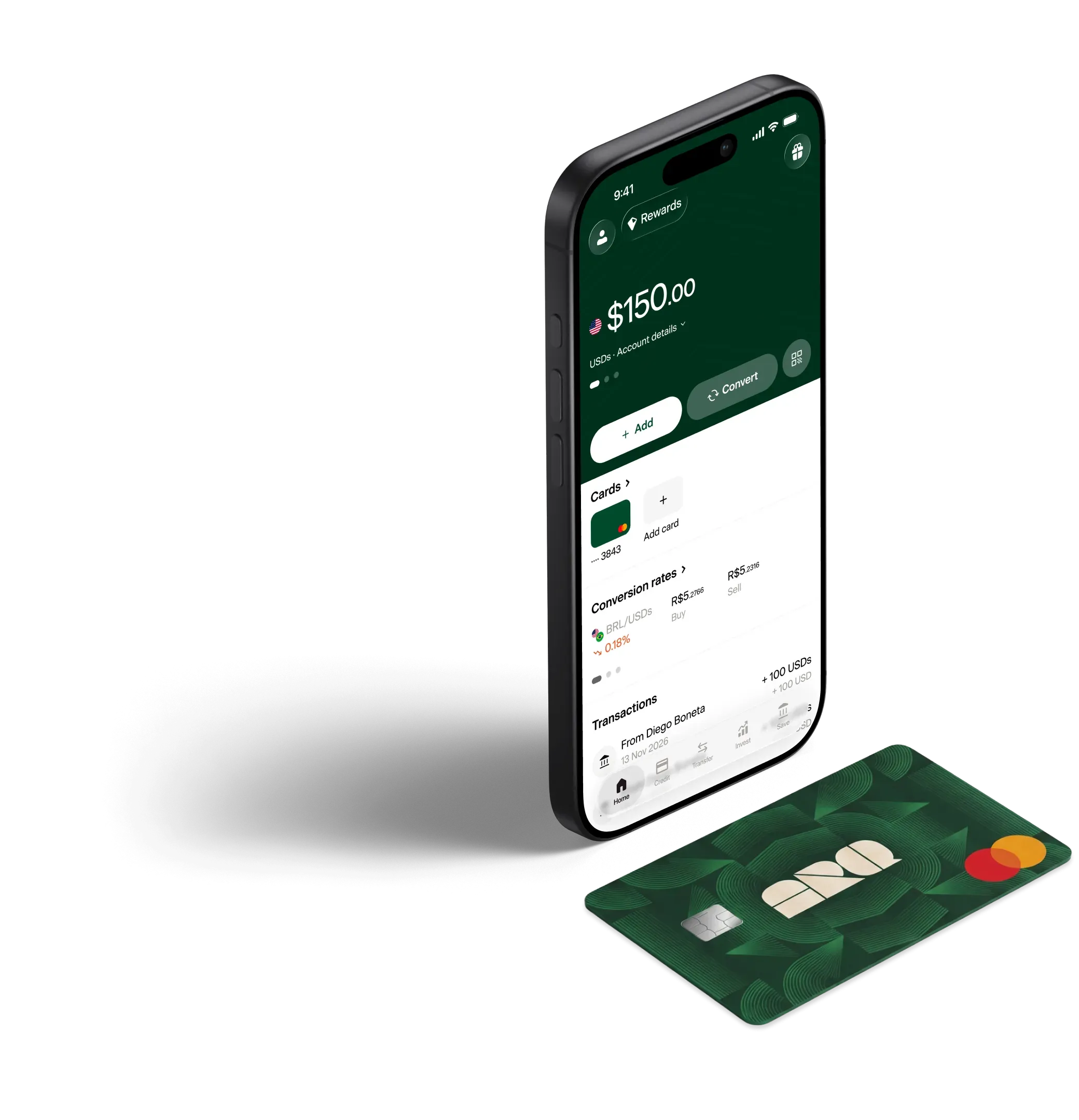
Convert reais to digital dollars or digital euros in seconds, at real market rates. Without hidden fees.
What comes out of a gross salary in Mexico (ISR and IMSS) and a 2026 step-by-step example: from MXN 20,000 gross to what you take home.

What financial institutions are, their types in Mexico, who supervises them and how to check that one is authorized before you hand over your money.
Remittances from parents, children or a spouse pay no ISR. From others, only above about MXN 128,454 a year. Examples and what to report.
Scan the code and join ARQ.
2 million people around the world already manage their finances with ARQ.