Your Money
Gross vs. Net Salary in Mexico: 2026 Calculation Example
What comes out of a gross salary in Mexico (ISR and IMSS) and a 2026 step-by-step example: from MXN 20,000 gross to what you take home.
Santiago SanchezNovember 27, 2026

PIX is the Central Bank of Brazil’s instant payment system: it works 24/7 and lets you pay or transfer in seconds using a QR code or a PIX key. With ARQ you can pay a PIX from your balance; the cost is shown before you confirm.
In recent years, Brazil has revolutionized the way payments are made thanks to its PIX system. A payment option that has become part of everyday life for millions of Brazilians since its launch in 2020. Whether it’s to shop in a store, pay for coffee, or send money to relatives.
But what makes it so appealing? Why is it so popular?
To find the answer, you first need to understand what PIX is and how it works—and we explain it here. By the end, you'll understand why it has become essential in Brazilians’ daily lives.
It’s an electronic payment system launched by the Central Bank of Brazil to send and receive money. Its main advantage is that it operates in real-time 24/7, including weekends and holidays.
Unlike traditional transfers like TED or DOC, Pix payments are free for individuals. It also allows money to be moved between accounts in seconds—no delays or banking restrictions.
It works similarly to digital wallets: from your phone, without cash, and with instant confirmation.
To get started, you can register a PIX key, which acts as a simplified identifier. It can be:
A phone number.
Email address.
CPF/CNPJ (tax identification number).
A random key.
That way, there’s no need to enter long bank account details to send or receive money.
Is PIX available to foreigners too?
Not officially. The Banco Central has no international PIX service yet, so a visitor without a Brazilian account usually pays by card, or through an app that pays the PIX QR code from a foreign balance, such as ARQ.
If you're traveling to Brazil and don’t want to use international credit cards—or they're not accepted—you can try PIX. You just need an account with a provider that offers the service and access to their mobile app.
The rest is simple.
Let’s say you’re making a purchase:
1. At checkout, choose PIX among the available payment options.
2. Open your banking or fintech app where your PIX key is registered.
3. Select the option to pay with PIX and scan the QR code, or if you prefer, copy and paste the provided code.
4. The app will show the transaction details for review. Once confirmed, authorize the payment.
5. Both the store and the app will notify you that the payment was successful.
The process is similar whether you're using a mobile phone or a PC. The same applies to remittances: you scan a QR code or enter the recipient’s PIX key—whether it's their phone number, email, or CPF.
Just remember it must be done through a service compatible with the system, such as our ARQ.
The system can be used almost anywhere in Brazil. Today, a wide variety of businesses accept this payment method due to its speed, so you can find it available at:
Supermarkets
Stores
Restaurants
Gas stations
E-commerce platforms
Transportation companies
Delivery services
It is also a common payment option between individuals, for example, to split accounts or make different types of remittances. Both within Brazil and from abroad through PIX-compatible services.
Additionally, it can be used to pay bills, taxes, and public services directly from your banking app or digital wallet.
PIX payments have gained widespread adoption thanks to a combination of factors that have made it massive and trustworthy, such as:
You don’t need to be a business owner to send or receive money without fees using PIX. Anyone can use it, which has encouraged its adoption in daily life.
For regular users, PIX doesn’t represent any cost. Unlike some businesses, which may pay small fees.
Making a payment with PIX takes just a few seconds. All you need to do is scan a QR code or enter the recipient’s key.
There are no complex steps or wait times. Therefore, it’s a fast solution for both personal and business payments.
There is no single cap for the whole system, but each bank sets limits, and by Banco Central rules PIX transfers between individuals from 8 p.m. to 6 a.m. are limited to R$1,000 by default. You can ask your bank to change it.
This flexibility has been key to its adoption at all levels.
ince transactions are made from your bank or fintech app using your phone, the risk of fraud is minimized. There’s no need to share sensitive banking information, and the entire process is backed by the Central Bank of Brazil.
One of PIX’s biggest attractions is that transactions are validated in real time. This is an advantage for those selling products or services and who need confirmation that the money has arrived. At the same time, buyers receive instant proof of payment.
ARQ is the fintech you need to create your PIX account and pay simply and quickly in Brazil. It doesn’t matter whether you’re paying businesses or individuals—you can do it using your USDc or EURc balance by:
Scanning a QR code generated by the recipient.
Entering a PIX key (phone number, email, CPF, or random key).
Using the recipient’s bank account details.
How to start?
1. Update ARQ to the latest version from your App Store or Google Play.
2. Go to the Brazil – PIX section from the “Send” tab, or tap the “Scan QR” button.
3. Enter the details by scanning the code, entering the PIX key, or inputting the account data.
4. Choose which balance you want to use (USDc, EURc, ARS, MXN, COP).
5. Confirm and you’re done! The payment is made instantly.
Does it have any cost?
Paying a PIX with ARQ costs 0.3% of the amount, already included in the conversion rate the app shows before you confirm (ARQ help center, November 2026).
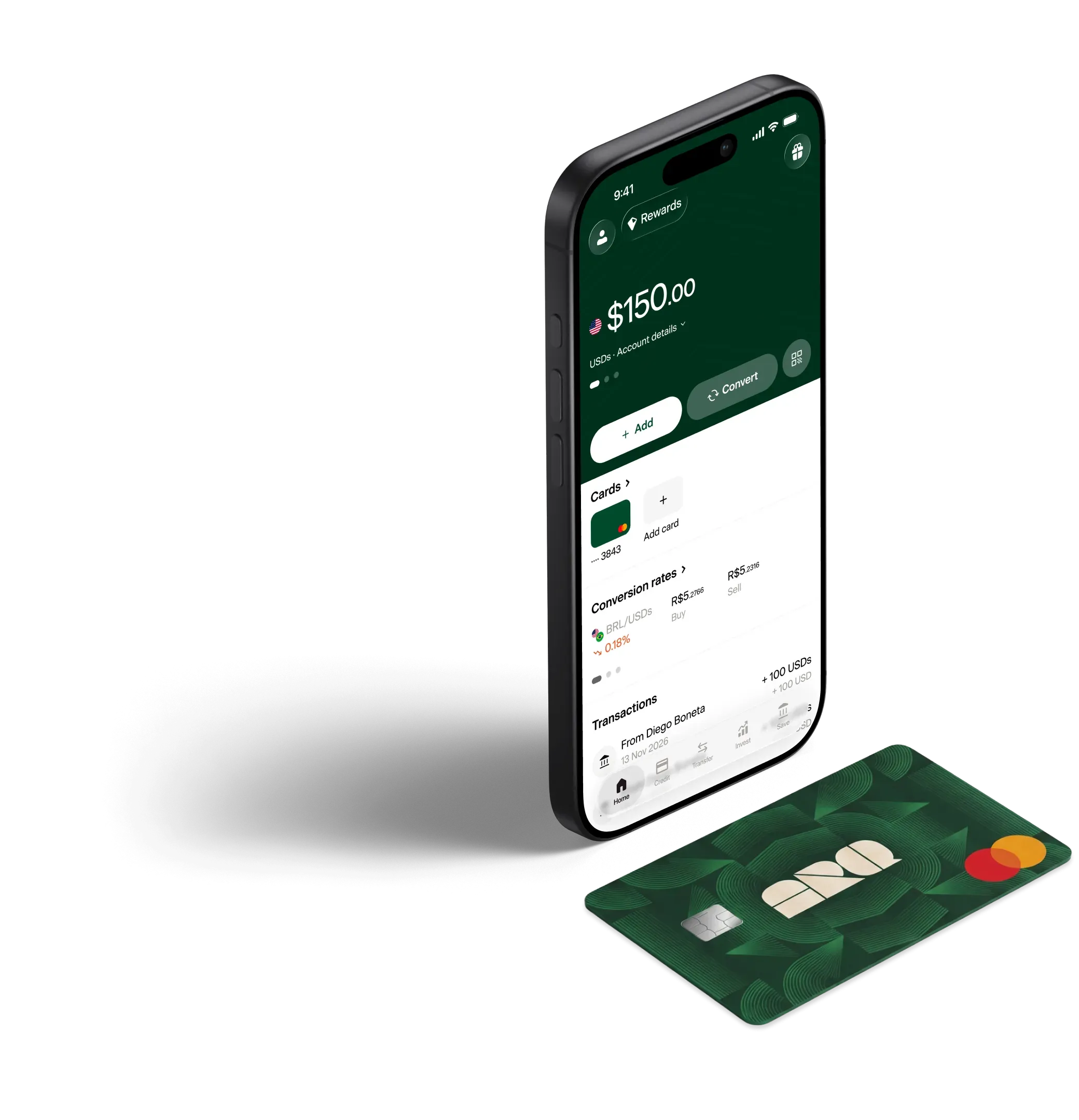
Convert reais to digital dollars or digital euros in seconds, at real market rates. Without hidden fees.
What comes out of a gross salary in Mexico (ISR and IMSS) and a 2026 step-by-step example: from MXN 20,000 gross to what you take home.
What financial institutions are, their types in Mexico, who supervises them and how to check that one is authorized before you hand over your money.
Remittances from parents, children or a spouse pay no ISR. From others, only above about MXN 128,454 a year. Examples and what to report.
Scan the code and join ARQ.
2 million people around the world already manage their finances with ARQ.