Your Money
What is Economic Development in Colombia?
Is Colombia’s economic development really advancing? Uncover its impact, challenges, and future prospects. Prepare for 2026!
Felipe Quintero GómezNovember 16, 2026

There are about 180 official currencies. The most traded are the US dollar, in 89% of FX transactions, the euro, the yen, the pound and the yuan, according to the BIS (April 2025).
Did you know how many currencies there are in the world? Approximately 180, representing the economic health of their countries. They are also vital for international trade, investments, and foreign transactions.
As a freelancer, understanding the world's currencies and their values is a task you need to undertake. Receiving payments in a currency that is depreciating is not very convenient, but if it comes from stronger currencies, it will be much more beneficial.
Today, we bring you the different types of currencies that exist globally and how valuable they are.
The best measure of a currency’s importance is how much it is used in the foreign exchange market. The Bank for International Settlements (BIS) Triennial Survey of April 2025 shows these as the most traded currencies:
Rank | Currency | Share of FX transactions |
1 | US Dollar (USD) | 89.2% |
2 | Euro (EUR) | 28.9% |
3 | Japanese Yen (JPY) | 16.8% |
4 | British Pound (GBP) | 10.2% |
5 | Chinese Yuan (CNY) | 8.5% |
6 | Swiss Franc (CHF) | 6.4% |
7 and 8 | Australian Dollar (AUD) and Canadian Dollar (CAD) | About 6% each |
Next | Hong Kong Dollar (HKD) | 3.8% |
Next | Singapore Dollar (SGD) | About 2% |
Every FX transaction involves two currencies, so the shares add up to 200%, not 100%.
It appears in almost nine out of ten FX transactions and is central banks’ main reserve currency. Oil, grains and much of world trade are priced in dollars.
The official currency of 21 of the 27 European Union countries, used by more than 350 million people. It is the second most traded currency and the second most held as a reserve.
Japan has one of the world’s largest economies, and the yen is widely used in international financial operations, which puts it in about one in six FX transactions.
One of the oldest currencies still in use. London is the world’s largest FX trading center, which keeps the pound among the most traded.
China is the world’s second-largest economy, and the yuan has gained ground in recent BIS surveys: from 7% of transactions in 2022 to 8.5% in 2025.
Switzerland’s stable economy and strong banking system make the franc a safe haven in times of crisis. Learn more in our article on the most stable currency in the world.
Both currencies closely follow the price of the commodities their countries export: iron ore and coal for Australia, and oil for Canada.
Both are currencies of major Asian financial centers. The Hong Kong dollar is pegged to the US dollar and also gained ground, from 2.6% of transactions in 2022 to 3.8% in 2025.
No. The currency with the highest value per unit is the Kuwaiti dinar (KWD): in October 2026, 1 dinar was worth about US$3.22. See the full ranking in the most expensive currency in the world.
No Latin American currency is among the ten most traded, but two stand out in the region:
Mexican Peso (MXN): the most traded currency in Latin America, thanks to Mexico’s close trade ties with the United States.
Brazilian Real (BRL): the currency of Latin America’s largest economy, strongly influenced by the price of the commodities Brazil exports.
The Argentine peso, Colombian peso, Chilean peso and Peruvian sol complete the region’s most relevant currencies.
Indian Rupee (INR), which tracks India’s fast-growing economy.
South Korean Won (KRW), from one of Asia’s most industrialized economies.
South African Rand (ZAR), the most traded African currency.
Swedish (SEK), Norwegian (NOK) and Danish (DKK) kroner, known for the stability of the Nordic economies.
At reference rates of October 27, 2026, these are the ten currencies that need the most units to equal 1 US dollar:
Iranian Rial (IRR): hit by international sanctions and high inflation.
Lebanese Pound (LBP): weakened by the financial crisis that began in 2019.
Vietnamese Dong (VND): low value per unit despite a growing economy.
Sierra Leonean Leone (SLE): reflects years of conflict and inflation.
Lao Kip (LAK): under pressure from the country’s foreign debt.
Indonesian Rupiah (IDR): from a stable economy, but with a low unit value.
Uzbek Som (UZS): created after Uzbekistan’s independence, in 1994.
Guinean Franc (GNF): affected by political instability despite Guinea’s natural resources.
Paraguayan Guaraní (PYG): low unit value since 1943 and never redenominated.
Ugandan Shilling (UGX): from an economy still dependent on agriculture.
A low value per unit doesn’t, on its own, mean a weak economy. See the details in the cheapest currency in the world.
Reserve currencies are foreign currencies that central banks hold to pay international obligations, defend their own currency and buy essential goods, such as oil and grains, which are usually priced in dollars.
According to the IMF, the US dollar remains the world’s main reserve currency, followed by the euro.
Currency | Countries of circulation | Symbol |
US Dollar (USD) | United States, Ecuador, El Salvador, Panama, among others | $ |
Euro (EUR) | Germany, Spain, France, Italy and the other 17 euro area countries | € |
Japanese Yen (JPY) | Japan | ¥ |
British Pound (GBP) | United Kingdom, Gibraltar, Falkland Islands | £ |
Australian Dollar (AUD) | Australia, Cocos Islands, Kiribati, Nauru, Tuvalu | A$ |
Canadian Dollar (CAD) | Canada | C$ |
Swiss Franc (CHF) | Switzerland, Liechtenstein | CHF |
Renminbi (Yuan) (CNY) | China | ¥ |
Hong Kong Dollar (HKD) | Hong Kong | HK$ |
South Korean Won (KRW) | South Korea | ₩ |
New Zealand Dollar (NZD) | New Zealand, Cook Islands, Niue, Pitcairn, Tokelau | NZ$ |
Mexican Peso (MXN) | Mexico | $ |
Swedish Krona (SEK) | Sweden | kr |
Russian Ruble (RUB) | Russia | ₽ |
Norwegian Krone (NOK) | Norway | kr |
Turkish Lira (TRY) | Turkey, Northern Cyprus | ₺ |
Singapore Dollar (SGD) | Singapore | S$ |
Indian Rupee (INR) | India | ₹ |
Brazilian Real (BRL) | Brazil | R$ |
South African Rand (ZAR) | South Africa | R |
Philippine Peso (PHP) | Philippines | ₱ |
Czech Koruna (CZK) | Czech Republic | Kč |
Indonesian Rupiah (IDR) | Indonesia | Rp |
Thai Baht (THB) | Thailand | ฿ |
Polish Zloty (PLN) | Poland | zł |
Israeli New Shekel (ILS) | Israel | ₪ |
UAE Dirham (AED) | United Arab Emirates | د.إ |
Argentine Peso (ARS) | Argentina | $ |
Hungarian Forint (HUF) | Hungary | Ft |
Kuwaiti Dinar (KWD) | Kuwait | د.ك |
Chilean Peso (CLP) | Chile | $ |
Malaysian Ringgit (MYR) | Malaysia | RM |
Colombian Peso (COP) | Colombia | $ |
Saudi Riyal (SAR) | Saudi Arabia | ر.س |
New Taiwan Dollar (TWD) | Taiwan | NT$ |
Romanian Leu (RON) | Romania | lei |
Nigerian Naira (NGN) | Nigeria | ₦ |
Dominican Peso (DOP) | Dominican Republic | RD$ |
Bahraini Dinar (BHD) | Bahrain | .د.ب |
Peruvian Sol (PEN) | Peru | S/ |
Uruguayan Peso (UYU) | Uruguay | $U |
Iranian Rial (IRR) | Iran | ﷼ |
Jordanian Dinar (JOD) | Jordan | د.ا |
Cuban Peso (CUP) | Cuba | $ |
Botswana Pula (BWP) | Botswana | P |
Paraguayan Guaraní (PYG) | Paraguay | ₲ |
Barbadian Dollar (BBD) | Barbados | Bds$ |
Bolivian Boliviano (BOB) | Bolivia | Bs |
Guatemalan Quetzal (GTQ) | Guatemala | Q |
If you work for clients in the United States or Europe, ARQ lets you send and receive payments with your own account details. Your balance stays in digital dollars (USDc) or digital euros (EURc), and you convert to pesos whenever you want, at the market conversion rate, with no hidden fees.
About 180 official currencies circulate in UN member countries. Some are shared by several countries, like the euro, and some countries use another country’s currency, like Ecuador and Panama, which use the US dollar.
The US dollar, present in 89.2% of FX transactions, according to the BIS (April 2025). The euro, yen and pound follow.
By value per unit, the Kuwaiti dinar (KWD), worth about US$3.22 in October 2026.
The Iranian rial (IRR). In October 2026, 1 US dollar bought about 1.76 million rials.
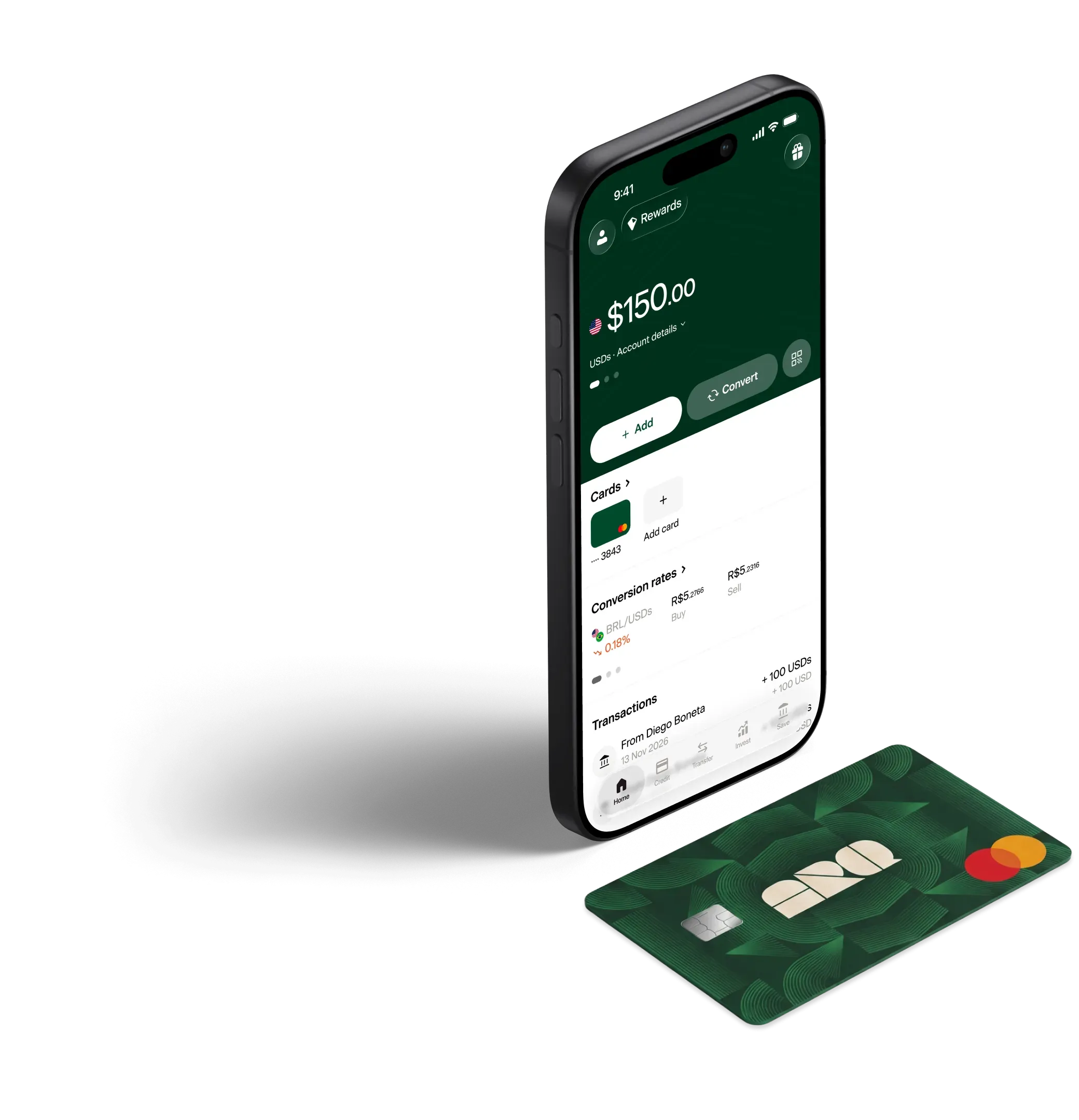
Convert reais to digital dollars or digital euros in seconds, at real market rates. Without hidden fees.
Is Colombia’s economic development really advancing? Uncover its impact, challenges, and future prospects. Prepare for 2026!

What are UDIS? They’re investment units through which you can protect your money from inflation. But there’s more—find out here.
Learn how to collect remittances in Mexico in 4 simple steps. We’ll also tell you the necessary requirements and the places where you can withdraw your money.
Scan the code and join ARQ.
2 million people around the world already manage their finances with ARQ.