
Your Money
Gross vs. Net Salary in Mexico: 2026 Calculation Example
What comes out of a gross salary in Mexico (ISR and IMSS) and a 2026 step-by-step example: from MXN 20,000 gross to what you take home.
Santiago SanchezNovember 27, 2026
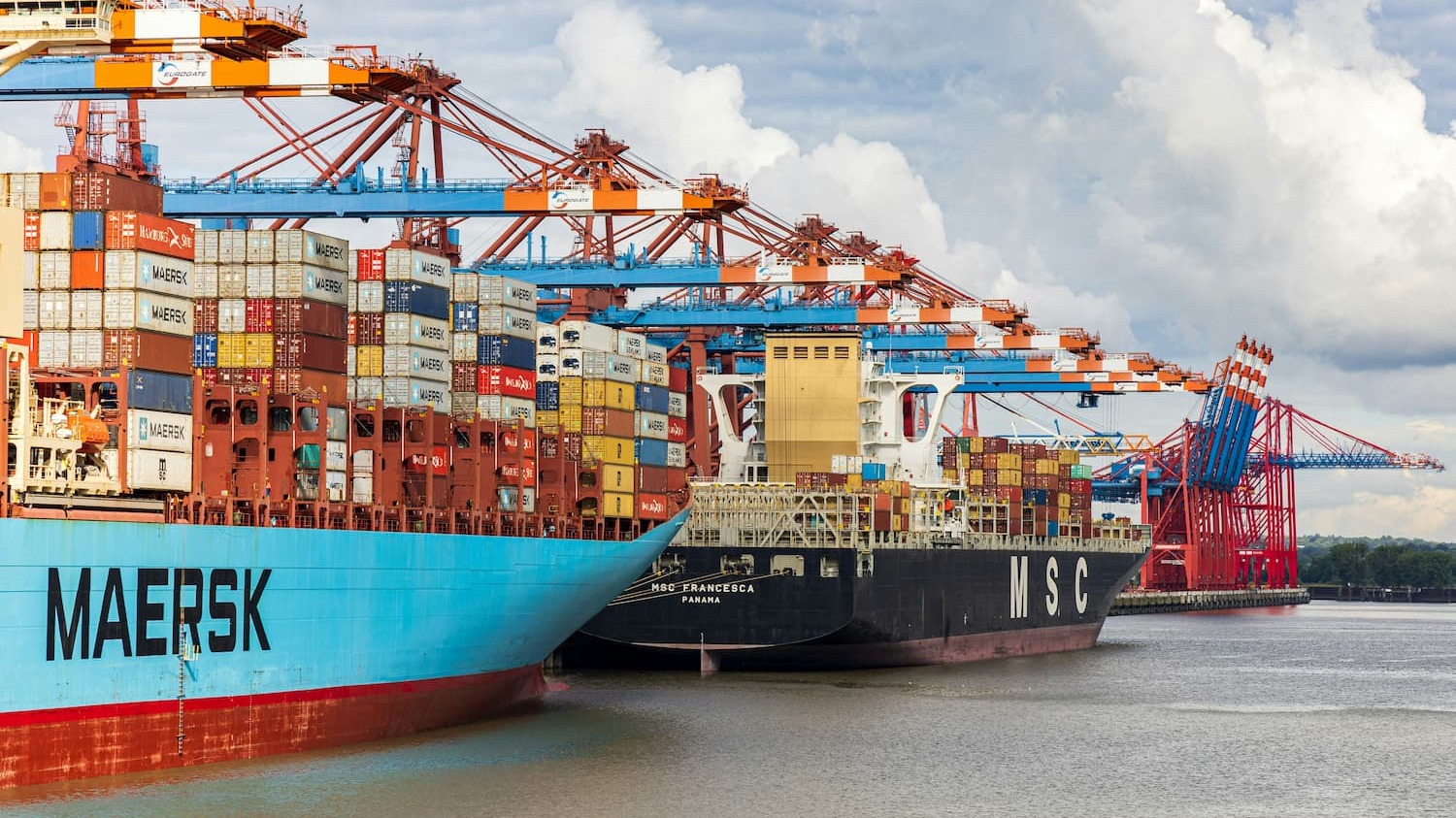
Tariffs can raise prices, cut jobs, add inflation and exchange-rate pressure, and reduce demand for Mexican exports. Since July 2026 the US charges 10% on Mexican goods outside USMCA rules; about 85% still enter tariff-free.
Tariffs are common across all countries, as they are used to protect domestic industries. But beyond the commercial aspect, exporting companies and consumers’ wallets are also impacted.
In the case of tariffs in Mexico, any change in the rules of the game can trigger a chain reaction—especially when those changes involve its main trading partners, like the United States.
Therefore, if you want to anticipate their possible consequences, you need to understand the effects of tariffs on the economy and foreign trade. Especially after the US changed its tariffs on Mexican goods several times in 2025 and 2026. This situation serves as a starting point to analyze the real impact of such measures on Mexico.
Although tariffs in Mexico are linked to foreign trade, their effects are strongly felt in the local economy. As a result, they also impact consumers directly.
In March 2025 the US imposed a 25% tariff on Mexican goods that don't meet USMCA rules, under an emergency law (IEEPA). In February 2026 the US Supreme Court ruled that IEEPA doesn't allow tariffs. Those tariffs were replaced by a 10% tariff on Mexican goods outside USMCA rules, under Section 301 since 24 July 2026.
Goods that meet USMCA rules, about 85% of Mexican exports, still enter the US tariff-free, according to the Secretaría de Economía (23 July 2026). Sector tariffs under Section 232, such as those on steel, aluminum and automobiles, apply separately. Data as of November 2026.
Some of the effects of tariffs on the Mexican economy include:
Companies facing higher costs to export or import supplies may pass those increases onto final prices in the local market. Additionally, some businesses may reduce production or distribution, affecting the availability of goods and services across the country.
If price increases outpace wage growth, monthly household income will buy less. This translates into a direct loss of purchasing power.
This situation hits hardest for those who spend most of their income on basic needs like food, transportation, and utilities.
Exporting companies may need to downsize their workforce or freeze salaries to manage losses. This directly impacts many job sectors, especially those tied to manufacturing, trade, and services.
If the peso weakens or inflation rises, the Bank of Mexico may need to increase interest rates. As a result, you’ll end up paying higher fees on mortgages, credit cards, or personal loans.
The current outlook might push you to avoid dollar-denominated debt and prioritize essential spending. And while that’s not necessarily a bad thing, it also means looking for substitute products and cutting expenses to make your money last.
If there’s a prolonged loss of purchasing power, preparing in advance is your best defense.
In this regard, there are several options—one of them is using UDIS for saving or investing. Why? Because their value increases with inflation, helping preserve your money’s real value over time. Of course, you can also explore other financial solutions.
Since the implementation of TLCAN and its renewal under the T-MEC, Mexico and the United States have developed an integrated trade network. This, in effect, has supported the growth of key sectors on both sides.
However, the recent application of Trump’s tariffs could disrupt that balance and lead to consequences beyond borders.
Now, how exactly do tariffs in Mexico impact this strategic relationship?
In several ways—let's look at some of them:
Hit to Key Export Sectors. Tariffs increase product prices and affect the demand for industries that represent up to 80% of Mexican exports to the U.S. This includes the automotive, electrical, and machinery sectors, which also see a drop in competitiveness
Threat to Employment and Investment. The automotive industry, for example, employs hundreds of thousands of people and generates millions of indirect jobs. A tariff can lead to rising production costs. This could result in layoffs, cancelled investments, and even the relocation of plants to other countries
Decrease in Trade Volume. With higher prices, U.S. consumers may delay purchases or look for suppliers outside of North America, reducing trade flows between both countries.
Exchange Rate and Inflation Effects. Trade tensions can also cause fluctuations in the exchange rate and inflationary pressures in Mexico, affecting the country’s economic stability.
Ultimately, tariff types like Trump’s can unbalance a trade relationship that has been mutually beneficial for decades.
Despite attempts to protect certain industries, they cause long-term distortions. We’re talking about economic losses, as well as tension between two strategic partners.
Beyond affecting Mexico’s internal economy, Trump’s tariffs alter its trade relations with the world.
But just as they may reduce trade flow with the U.S., opportunities may also begin to emerge in other regions.
Here’s what you should know:
US tariffs on Mexican products that don't meet USMCA rules increase their cost in the U.S. market, reducing demand. The automotive, electronics, and steel sectors are the most affected.
Regional integration under the USMCA means that these types of tariffs also harm U.S. and Canadian companies that rely on Mexican inputs.
With the fall of the Mexican peso in 2024, domestic products became cheaper in dollars. However, that’s not enough to offset the impact of Trump’s tariffs.
Given the new tariffs imposed by the U.S. in 2025, the EU could see Mexico as a strategic partner. This would allow Europe to expand its import sources and reduce trade dependence on the U.S. Moreover:
The modernized EU-Mexico agreement, signed on 22 May 2026, opens a path to market diversification. The EU completed its approval of the interim trade deal in July 2026; it enters into force once Mexico also ratifies it.
Some products could enter the European market if tariffs persist. In that case, several industries, such as automotive and agriculture, could benefit.
On the other hand, competing in Europe involves logistical challenges and high transportation costs. Additionally, Mexico would face strong competitors like China and Vietnam.
Likewise, it’s important to consider that reshaping supply chains toward Europe would be slow and expensive—although strategic in the medium term.
Chinese goods have faced US tariffs for years. And since 1 January 2026, Mexico itself charges tariffs of 5% to 50% on 1,463 tariff lines from countries it has no trade agreement with, China among them. In that context, Mexico stands out as an ally thanks to its location and its link with Latin America.
As a result, Chinese investments in manufacturing are coming to Mexico under the nearshoring model. In turn, Mexico is seeking partnerships with Southeast Asian countries through the CPTPP, especially with Japan, Australia, and Vietnam.
But Mexico’s heavy reliance on the U.S. market limits fast diversification. Moreover, Asian competition, along with cultural and logistical barriers, present significant challenges.
All these trade tensions and other changes are pushing both companies and consumers to adopt strategies that help them remain resilient.
If you earn from abroad, ARQ lets you receive payments from the US and Europe with your own account details and hold USDs and EURc. International payments cost US$3 (ACH or wire) or €3 (SEPA) on the Standard plan. ARQ's card is a secured credit card backed by your ARQ balance, accepted wherever Mastercard is.

Get digital dollars and digital euros in seconds, at real market rates. Without hidden fees.
What comes out of a gross salary in Mexico (ISR and IMSS) and a 2026 step-by-step example: from MXN 20,000 gross to what you take home.
What financial institutions are, their types in Mexico, who supervises them and how to check that one is authorized before you hand over your money.
Remittances from parents, children or a spouse pay no ISR. From others, only above about MXN 128,454 a year. Examples and what to report.
Scan the code and join ARQ.
2 million people around the world already manage their finances with ARQ.