Your Money
Gross vs. Net Salary in Mexico: 2026 Calculation Example
What comes out of a gross salary in Mexico (ISR and IMSS) and a 2026 step-by-step example: from MXN 20,000 gross to what you take home.
Santiago SanchezNovember 27, 2026
In Mexico, there isn’t a single fixed amount you can receive from abroad without reporting it: it depends on the source, frequency, and whether you exceed certain annual thresholds. If it’s for work or business, it must be reported from the first peso.
Mexicans receive international money transfers daily—whether it’s family remittances, freelance payments, or transfers between accounts. But what many don’t know is that the SAT is also watching.
What happens if I receive money from abroad? Do I have to pay taxes? Is there a limit?
Today we answer those questions clearly, including how much money you can receive from abroad without declaring it to the SAT, when taxes apply, and the best ways to receive international transfers.
Mexico does not have a single amount that triggers a mandatory report to the SAT for international transfers. The threshold for reporting depends on:
The origin of the funds
The frequency of the transfers
Whether the total exceeds certain annual limits
Receiving a one-time remittance is different from receiving regular payments for professional services.
So, to answer “how much money can I receive from abroad without declaring it to the SAT?”—it depends. Not all income is treated the same under tax law.
What If I Receive a Large Amount of Money from Abroad?
If the amount is significant, you’ll likely need to report it.
The SAT can track any transaction—especially if you receive more than 600,000 MXN per year. In that case, you’re obligated to include it in your tax return.
Not all remittances are taxable or need to be declared as income. Some are exempt if they qualify as donations, according to the Mexican Income Tax Law (ISR).
Under Article 93, section XXIII, of the Income Tax Law, money you receive from your spouse or from ascendants or descendants in a direct line (parents, grandparents, children, grandchildren) is exempt, whatever the amount.
What If the Money Comes from Distant Relatives or Third Parties?
Donations from anyone else are exempt only up to three times the annual UMA (about MXN 128,454 in 2026). The law still says "minimum wage," but since the 2016 de-indexation that reference is calculated with the UMA (MXN 117.31 a day in 2026). Anything above that is taxable income.
And again, if the total exceeds 600,000 MXN in one year, you must report it to the SAT—even if it’s a tax-exempt donation. Not paying taxes doesn’t mean you don’t have to declare it.
If you earn money through work or business activities, you must pay taxes, no matter where the money comes from.
Whether your clients are local or international, the SAT considers that income taxable.
So, all earnings must be included in your annual ISR declaration. In this case, there is no tax-free threshold—you must report from the very first peso.
If you run a business or work as a freelancer, make sure to issue invoices and keep track of all payments.
Taxes on income from abroad in Mexico vary based on your annual earnings. The SAT assigns a fixed fee and a percentage rate depending on your income bracket.
This is the annual ISR table for tax year 2026, used in the annual return filed in April 2027 (Anexo 8 of the 2026 Miscellaneous Tax Resolution). Tax year 2025 uses a different table.
Lower limit (MXN) | Upper limit (MXN) | Fixed fee (MXN) | % on excess over lower limit |
0.01 | 10,135.11 | 0.00 | 1.92% |
10,135.12 | 86,022.11 | 194.59 | 6.40% |
86,022.12 | 151,176.19 | 5,051.37 | 10.88% |
151,176.20 | 175,735.66 | 12,140.13 | 16.00% |
175,735.67 | 210,403.69 | 16,069.64 | 17.92% |
210,403.70 | 424,353.97 | 22,282.14 | 21.36% |
424,353.98 | 668,840.14 | 67,981.92 | 23.52% |
668,840.15 | 1,276,925.98 | 125,485.07 | 30.00% |
1,276,925.99 | 1,702,567.97 | 307,910.81 | 32.00% |
1,702,567.98 | 5,107,703.92 | 444,116.23 | 34.00% |
5,107,703.93 | and above | 1,601,862.46 | 35.00% |
Hiding money received from abroad is not a good idea. If you're required to report the funds and fail to do so, it’s only a matter of time before the SAT notices.
They can demand explanations, apply penalties, or adjust your tax records.
Banks report to the SAT cash deposits that add up to more than MXN 15,000 a month (Article 55 of the Income Tax Law), and the SAT cross-checks your income against your invoices and bank statements.
So if you receive funds that don’t show up on your tax return, the SAT will likely know.
Bottom line: If the money is for work or business, report it and pay what’s due. If it’s a remittance, be sure to document its origin properly.
Tip: Focus on declaring everything before worrying about how much tax you’ll owe on foreign income.
Fortunately, there are several ways to receive money from abroad in Mexico—whether from a family member or work-related income.
Here are three practical and secure methods:
1. International Bank Transfer. It is a safe and direct option, but not very convenient if you want to get the money fast. In addition, bank transfers of this type usually take 1 to 5 business days and are subject to high fees.
2. Money Transfer Services. If you want to collect cash instantly, services like Western Union are an option. You just need your ID and the transfer number from the sender.
However, fees vary significantly and the exchange rate is often unfavorable.
3. Accounts for receiving dollars or euros. Useful if you bill clients in the U.S. or Europe. ARQ gives you your own account details in the U.S. and Europe to receive payments in USDs and EURc. On the Standard plan, each international payment costs US$3 or €3.
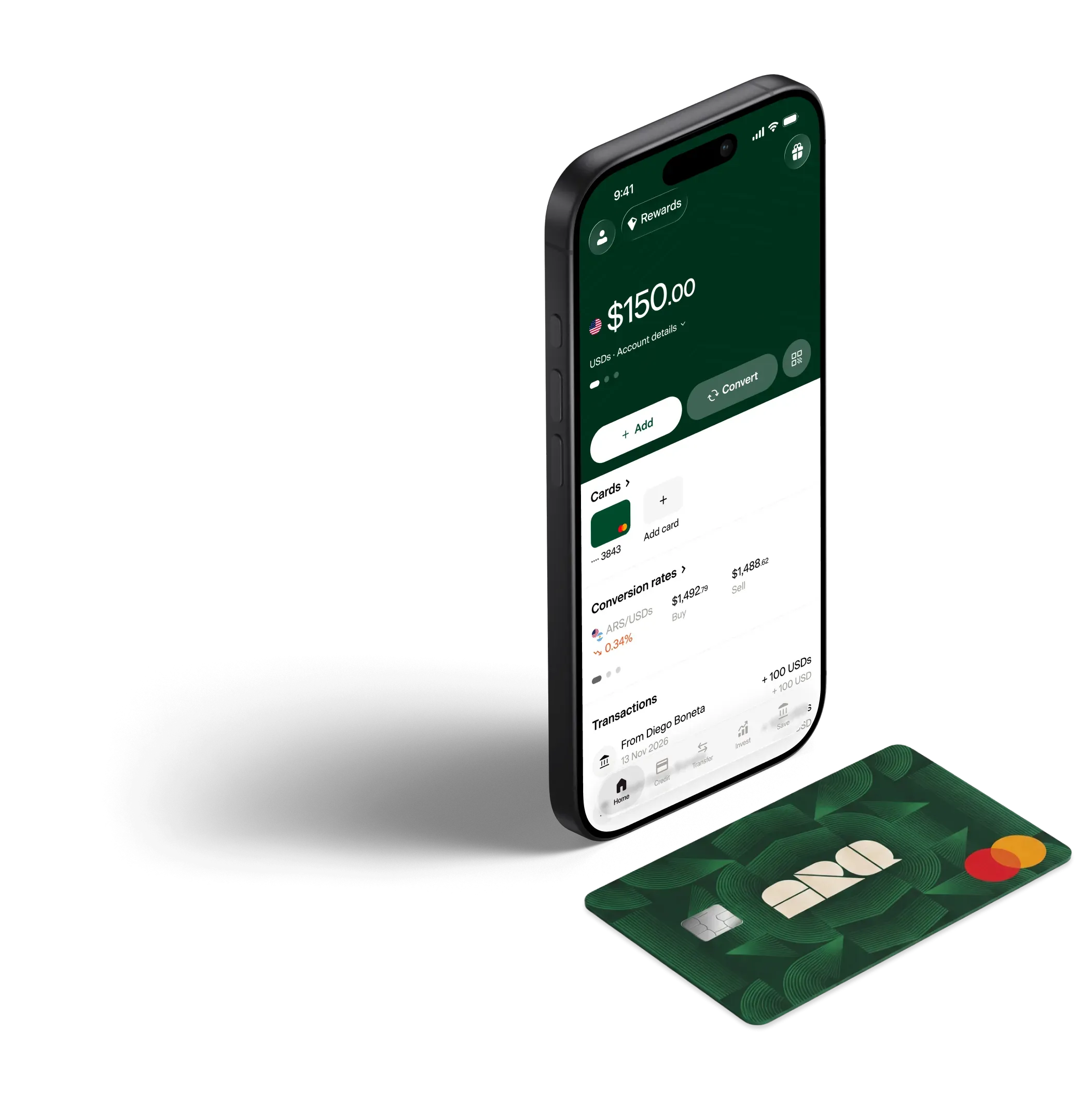
Convert pesos to digital dollars or digital euros in seconds, at real market rates. Without hidden fees.
What comes out of a gross salary in Mexico (ISR and IMSS) and a 2026 step-by-step example: from MXN 20,000 gross to what you take home.

What financial institutions are, their types in Mexico, who supervises them and how to check that one is authorized before you hand over your money.
Remittances from parents, children or a spouse pay no ISR. From others, only above about MXN 128,454 a year. Examples and what to report.
Scan the code and join ARQ.
2 million people around the world already manage their finances with ARQ.