Your Money
Gross vs. Net Salary in Mexico: 2026 Calculation Example
What comes out of a gross salary in Mexico (ISR and IMSS) and a 2026 step-by-step example: from MXN 20,000 gross to what you take home.
Santiago SanchezNovember 27, 2026
A transfer reference is the number or code that identifies a payment so it can be tracked; it’s not the same as the payment description. Below is a table of each data point on a Mexican SPEI receipt and what it’s for.
In banking transfers, there are two key elements for transaction security: the reference number and the payment concept, whether domestic or international.
Each has a specific purpose and it’s vital to understand how they work to avoid errors or issues.
That’s why in this post we’re giving you a definition of what a reference in a transfer is, along with some examples of its use. We’ll also explain what the concept of a transfer is and the benefits both provide in banking transactions.
It’s a number or code that allows you to specifically identify each banking transaction. However, in certain systems or configurations, it may accept text or alphanumeric combinations.
The reference for a bank transfer is often confused with the concept, but they are two different fields.
The reference in a bank transfer is a number automatically generated by the system. Sometimes, though, it must be entered manually by the sender, such as when the bank requires a specific number related to an invoice or contract.
It all depends on the bank’s policies.
The bank reference number is the code used to identify a particular transaction. Additionally, it varies according to the system or the financial institution and can include important information related to the transfer, such as:
Invoice number
Recipient’s account number
Date of the transaction
Contract number
In general, it appears on the receipt or in the details of your transaction in online banking.
What is it for?
It’s used to identify, track, and verify each operation in a unique way, facilitating control and the resolution of possible problems.
Bank reference number example:
In Mexico, a bank reference number might look like “0067345” through the SPEI system.
But in the case of international transfers, such as those made via SWIFT, the reference could be the UETR, i.e., an alphanumeric code of 36 characters that allows global tracking.
A SPEI transfer in Mexico shows several numbers that are easy to mix up. This table tells you which is which:
Data point | What it is | Who sets it | What it’s for |
Numeric reference | A number of up to 7 digits | You, when sending | Identifying the payment, for example with your invoice number |
Payment description (concepto) | Free text describing the payment | You, when sending | Letting the recipient know what the money is for |
Tracking key (clave de rastreo) | A code your bank assigns to each SPEI | Your bank | Tracking the payment and downloading the official receipt |
CEP | Banco de México’s electronic payment receipt | Banco de México | Proving the payment was made; available for 45 business days |
Transaction number | Your bank’s internal number | Your bank | Raising a claim with your bank |
If the recipient says the money didn’t arrive, look up the CEP on Banxico’s site with the date, tracking key, sending and receiving banks, account and amount.
It’s an optional text where the sender can add a description or reason for the payment. It’s placed when making a bank transfer and provides the recipient with additional context about the purpose of the transaction.
This detail allows you to quickly identify the reason for the transfer, in both personal and commercial transactions.
It can contain text as well as numbers.
The most important thing about this field is that the recipient instantly understands what the payment is for.
Examples of transfer concepts:
Personal payments | Commercial payments | Recurring transfers |
“Rent January 2025”. “Loan repayment” | “Payment for January services” “Advance payment for contract X” | “Auto loan payment”. “Monthly loan installment”. |
The goal is for the receiving party to understand the nature of the payment at a glance.
The aim is to include relevant, understandable details for the recipient while avoiding unnecessary or sensitive information. Nor should you write suspicious words or phrases that have nothing to do with the true purpose of the payment.
Keep in mind that banking monitoring systems use technologies that detect potential illegal activities. Therefore, if the SAT sees unusual or inconsistent concepts, they might request detailed explanations and, in more serious cases, demand evidence proving the transaction’s legitimacy.
Not recommended concept examples for a transfer:
“Thanks for everything”
“Undeclared loan”
“Secret gift”
“Drugs”
“Weapons”
“Cash business”
Think carefully about which concept to include in a transfer so you don’t have to provide unnecessary explanations.
The fields for the concept and reference in a transfer help you organize your payments and optimize key processes.
Technical tracking: As it’s a unique number, it allows quick tracking and verification of transactions within the banking systems.
Accurate reconciliation: It facilitates the technical identification of each transfer for the receiving party, which is useful to avoid duplicates or errors.
Banking organization: Serving as a unique identifier, it ensures each transaction is recorded and associated with the corresponding payment in the correct way.
Clear identification of purpose: Lets the sender explain the reason for the payment, helping the beneficiary understand what the transaction is about.
Streamlined business reconciliations: By including information such as invoice numbers or specific descriptions, it assists accounting departments in verifying and organizing payments.
Detailed history: It acts as a clear record of the payments made, aiding in both personal and business follow-ups.
Reduced confusion: Minimizes misunderstandings or issues in identifying the payment.
We could say that the reference number in a transfer and the concept enhance security and clarity in your transactions.
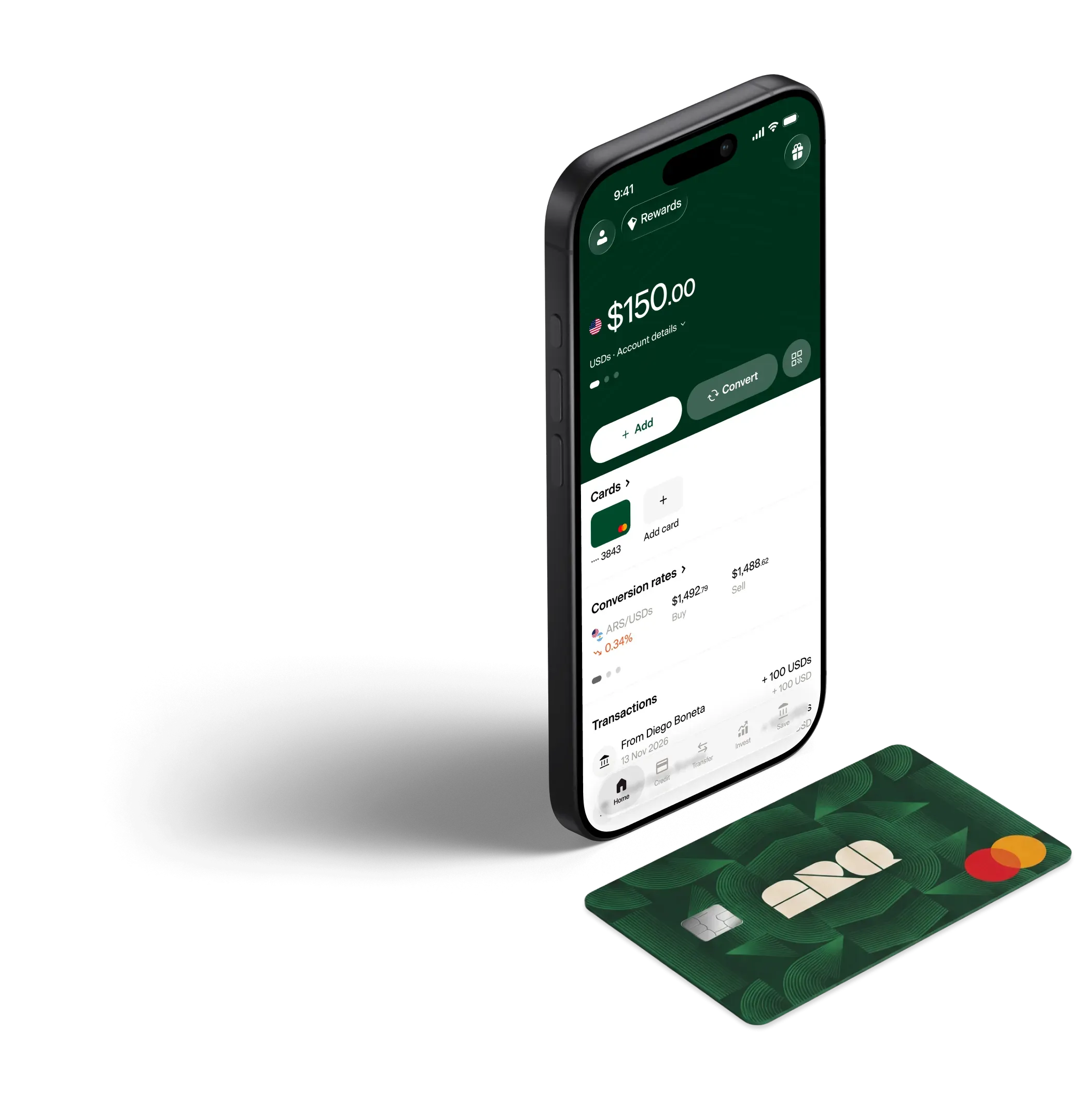
Now, if you perform international transfers, consider using ARQ to simplify your financial operations. With it, you can send or receive money in digital dollars and convert them to pesos with a favorable exchange rate. This way, you can simplify your electronic payments while maintaining security.
Both the recipient and the sender can view the reference in a bank transfer. Likewise, financial institutions use it internally to identify and track the transaction.
In Mexico, the reference number in a transfer can be up to 7 digits through the SPEI system. But the length often varies between banks or transfer platforms. For example, the reference in a BBVA transfer can be 20 to 30 digits.
To complete a bank transfer, you need information such as the recipient’s full name, account or CLABE number. As well as the amount to transfer and the tracking key generated by the bank.
Convert pesos to digital dollars or digital euros in seconds, at real market rates. Without hidden fees.
What comes out of a gross salary in Mexico (ISR and IMSS) and a 2026 step-by-step example: from MXN 20,000 gross to what you take home.

What financial institutions are, their types in Mexico, who supervises them and how to check that one is authorized before you hand over your money.
Remittances from parents, children or a spouse pay no ISR. From others, only above about MXN 128,454 a year. Examples and what to report.
Scan the code and join ARQ.
2 million people around the world already manage their finances with ARQ.