Your Money
Gross vs. Net Salary in Mexico: 2026 Calculation Example
What comes out of a gross salary in Mexico (ISR and IMSS) and a 2026 step-by-step example: from MXN 20,000 gross to what you take home.
Santiago SanchezNovember 27, 2026
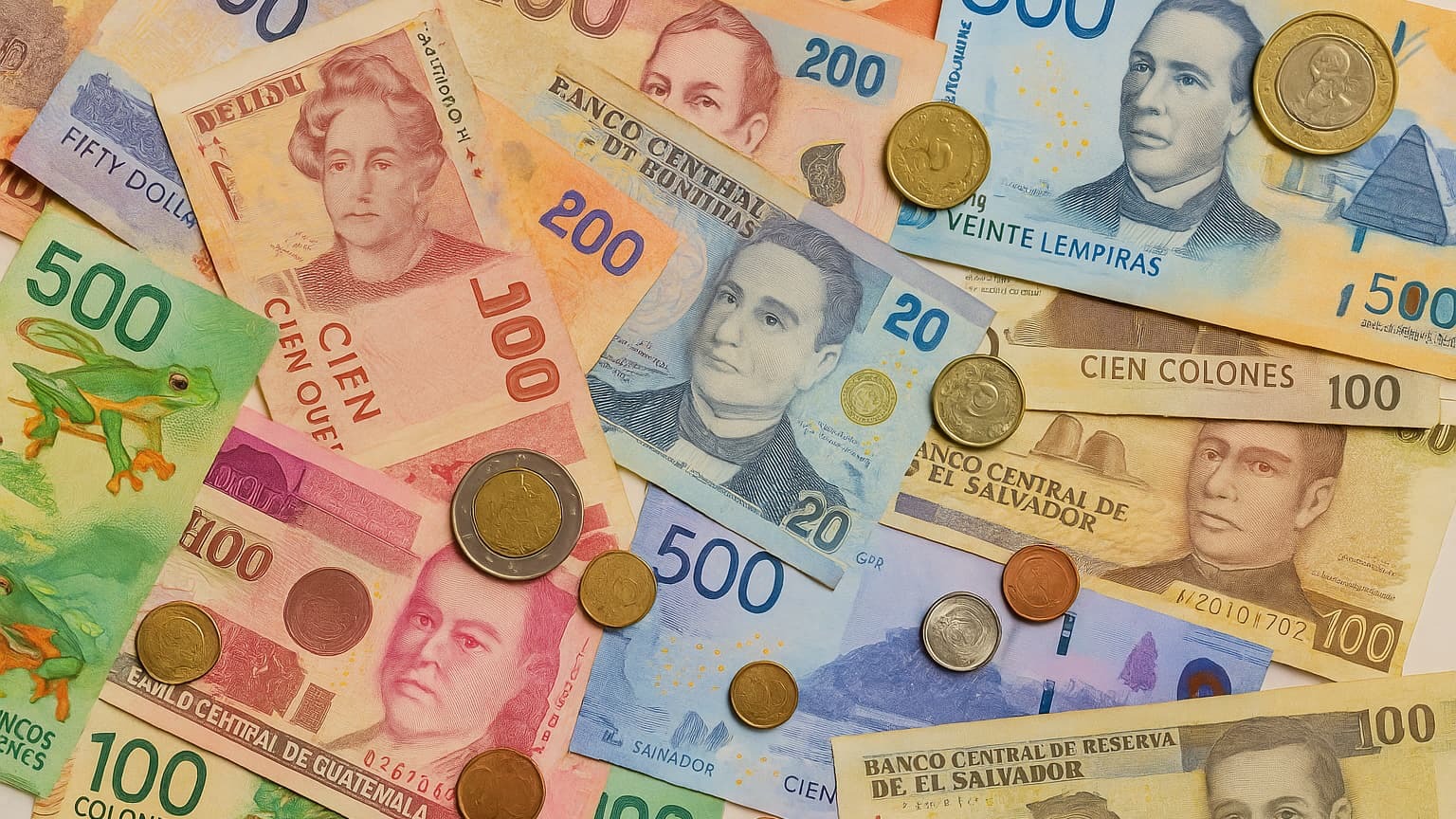
In Central America, each country has its own currency (like the quetzal, lempira, or colón), but the US dollar also circulates in some places: El Salvador uses it as official currency, and in Panama you pay with US dollars and balboa coins.
Central America is a diverse region in terms of culture and landscapes, and its monetary systems are just as varied. Understanding how money works in each country is just as important as having your travel documents in order.
That’s why we’ve prepared a practical guide to help you understand which currency is used in each Central American country, its equivalence to the US dollar, and some useful tips for exchanging money.
Take note and plan your budget better if you're heading to any of these countries.
Knowing which currency is used in the country where you plan to travel or work is essential for several reasons. One of the main reasons is that it allows you to plan a more accurate budget.
The first thing to clarify is that not all world currencies are equally stable. For this reason, some Central American countries use the US dollar alongside or instead of their local currencies.
That said, let’s look at the currencies used in Central America:
The official currency of Belize is the Belize dollar, which has been in circulation since 1978. Its value is pegged to the US dollar at a fixed exchange rate: 2 BZD equals 1 USD. For this reason, the American dollar is accepted in many parts of the country. However, if you pay with USD and need change, you’ll receive Belize dollars.
Since 1896, Costa Rica's official currency has been the colón, named after Christopher Columbus. Most daily transactions are made in colones, especially in markets and public transportation. However, in tourist areas and large businesses, US dollars are commonly accepted.
The Costa Rican exchange rate may vary according to the bank or exchange houses.
In Nicaragua, banknotes range from 10 to 1,000 córdobas, along with coins up to 10 córdobas. US dollars are widely accepted in hotels and major stores. However, for daily expenses, it’s better to use córdobas, since many prices adjust based on the daily exchange rate.
The official currency in Honduras is named after a local indigenous leader who resisted the Spanish conquest. Most local purchases are made in lempiras, but the US dollar is also accepted, especially in tourist areas.
The US dollar has been the official currency of El Salvador since 2001, replacing the Salvadoran colón. This simplifies transactions for tourists and foreign workers, since there's no need to exchange currencies if you already have dollars. Prices are listed in USD, and American bills and coins are used throughout the country, including ATMs.
The quetzal is Guatemala's official currency, named after the country's national bird. Banknotes range from 1 to 200 quetzals, and coins go from 5 centavos to 1 quetzal. US dollars are accepted in some tourist locations, but it’s best to use quetzals to avoid poor exchange rates or extra fees. The exchange rate in Guatemala is known for its flexibility.
Panama has a unique monetary system with two official currencies: the balboa and the US dollar. However, the balboa exists only in coin form, while all purchases, salaries, and savings are made in dollars. The balboa is pegged 1:1 to the dollar, so there's no variation in the exchange rate.
As you can see, the list is shorter than that of Latin American currencies, and most countries also use the American dollar.
Here is a summary of each Central American country's official currency and ISO code:
Country | ISO Code | Central American Currency | Currency Code |
Belize | BZ | Belize Dollar | BZD |
Costa Rica | CR | Colón | CRC |
El Salvador | SV | US Dollar | USD |
Guatemala | GT | Quetzal | GTQ |
Honduras | HN | Lempira | HNL |
Nicaragua | NI | Córdoba | NIO |
Panama | PA | Balboa and US Dollar | PAB/USD |
The exchange rates of Central American currencies against the US dollar are key if you plan to travel, work, or shop in the region. As of now, here is the exchange rate for each country:
Country | Currency | 1 USD equals | Reference |
Belize | Belize Dollar (BZD) | 2.00 BZD | Fixed peg |
Costa Rica | Costa Rican Colón (CRC) | 444.55 CRC | Market (ExchangeRate-API) |
El Salvador | US Dollar (USD) | 1.00 USD | Official currency |
Guatemala | Guatemalan Quetzal (GTQ) | 7.64 GTQ | Market (ExchangeRate-API) |
Honduras | Honduran Lempira (HNL) | 26.87 HNL | Market (ExchangeRate-API) |
Nicaragua | Nicaraguan Córdoba (NIO) | 36.62 NIO | Official, Central Bank of Nicaragua |
Panama | Panamanian Balboa (PAB) | 1.00 PAB | At par with the US dollar |
Rates as of November 19, 2026. Banks and exchange houses give you somewhat less per dollar because they add their own margin.
Before traveling, it’s important to plan how you will manage your money, including currency exchange. Here are a few tips:
Some Central American currencies are hard to find outside the region. So it may be more practical to exchange at least a small amount before you arrive, enough for initial expenses like transportation and food.
Airport exchange offices are one of the first options upon arrival, but exchanging large amounts there can be expensive due to unfavorable rates. Exchange just enough for initial expenses and look for better rates in the city.
This also applies if you carry less common currencies, such as Asian currencies or African currencies. Since in many cases they are not accepted in Central American airports.
Cash is essential in local markets, public transport, or rural areas. It's wise to carry some small bills in local currency, as many vendors may not have change or accept cards.
For more touristy areas, hotels, supermarkets, and international chains, use globally accepted cards like Visa or Mastercard.
The ARQ card is a secured credit card backed by the balance in your ARQ account, accepted wherever Mastercard is. ATM withdrawals cost 1% on the Standard plan, and the local ATM may charge its own fee.
Per unit, the Panamanian balboa, which is worth exactly one US dollar, followed by the Belize dollar, worth half a dollar. The quetzal (about 7.6 per dollar) and the others are worth less per unit, which says nothing about how healthy each economy is.
Yes, in most Central American countries you can use US dollars, especially in tourist areas. However, having local currency is recommended to avoid bad exchange rates or restrictions.
To avoid currency exchange scams in Central America or anywhere else, stick to reliable options such as exchange offices or banks. If using an ATM, count your money immediately and avoid exchanging money on the street.
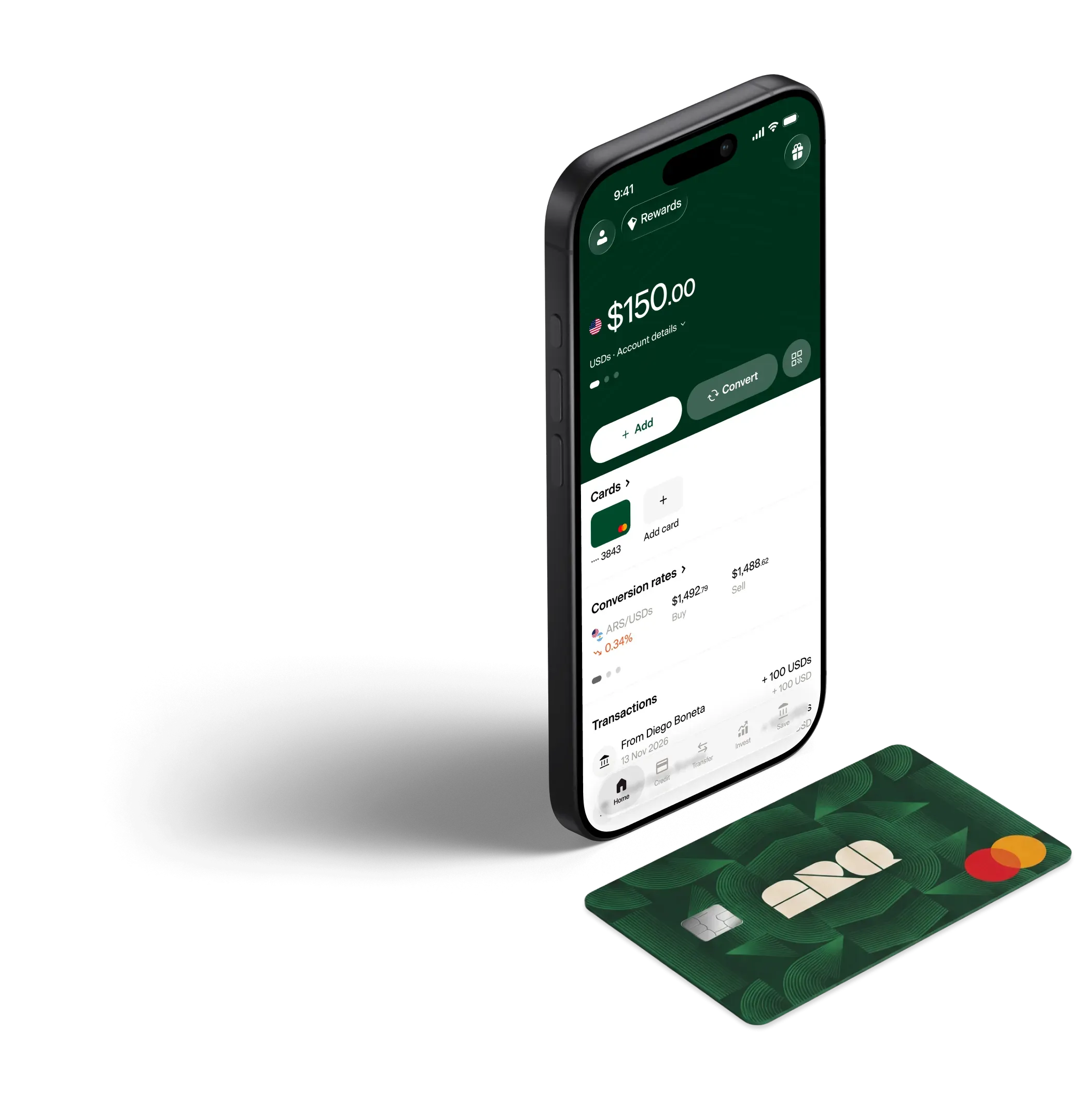
Convert pesos to digital dollars or digital euros in seconds, at real market rates. Without hidden fees.
What comes out of a gross salary in Mexico (ISR and IMSS) and a 2026 step-by-step example: from MXN 20,000 gross to what you take home.
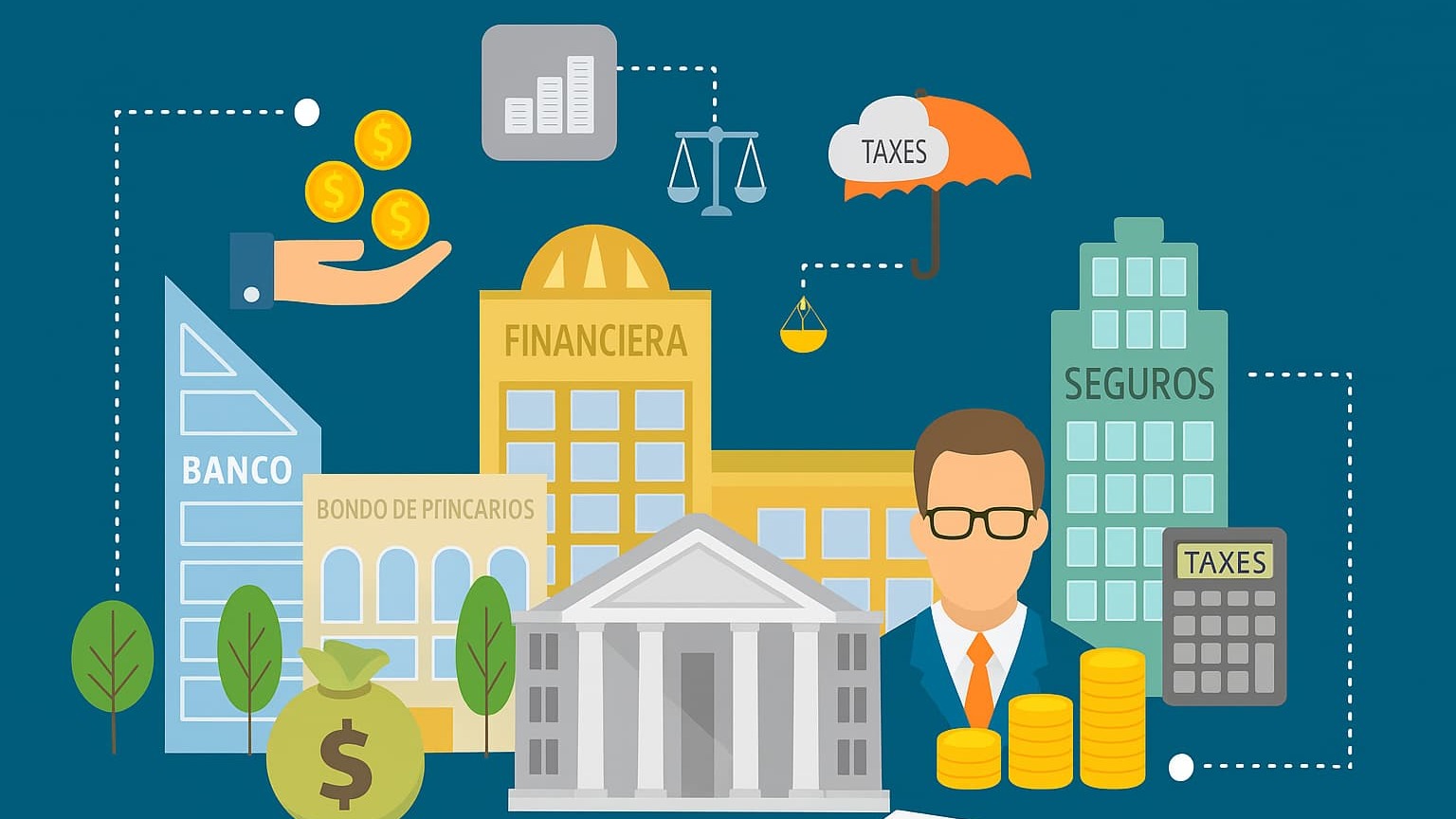
What financial institutions are, their types in Mexico, who supervises them and how to check that one is authorized before you hand over your money.
Remittances from parents, children or a spouse pay no ISR. From others, only above about MXN 128,454 a year. Examples and what to report.
Scan the code and join ARQ.
2 million people around the world already manage their finances with ARQ.